In specialty coffee, altitude is shorthand for quality. The higher the farm, the better the cup — or so the axiom goes. Like most axioms, it is an oversimplification. But the underlying science is sound, and understanding why altitude matters will change how you taste every cup of coffee you drink.
The Science of Slow Ripening
Coffee is a tropical plant that evolved in the understory of Ethiopian montane forests at elevations between 1,200 and 2,100 meters. At these altitudes, temperatures are moderate — warm enough for photosynthesis, cool enough to slow metabolic processes. This is important because the rate at which a coffee cherry matures directly affects its internal chemistry. A cherry that ripens quickly produces a less complex seed than one that matures slowly.
At lower elevations — below 1,200 meters — ambient temperatures are higher, metabolism is faster, and cherries ripen in as little as six to seven months from flowering. The plant does not have time to accumulate the complex sugars, organic acids, and aromatic precursors that create nuanced flavour in the cup. The result is coffee that tastes flat, one-dimensional, and often harsh. This is the coffee that fills commodity markets.
At high altitude — above 1,500 meters — cooler temperatures slow cherry maturation to nine or even ten months. During those additional weeks and months, the plant continues to photosynthesize, produce sucrose and fructose, and accumulate organic acids. The longer the cherry hangs on the branch, the more complex its internal chemistry becomes. This is not a marginal difference. Cupping scores for the same varietal grown at 1,200 meters versus 1,800 meters can differ by ten or more points.
Sugar Concentration at Altitude
The relationship between altitude and sugar content is driven by diurnal temperature variation — the swing between daytime highs and nighttime lows. At sea level in the tropics, this variation may be only 5–8°C. At 1,800 meters in the Guatemalan highlands, it regularly exceeds 15°C. The warm days drive photosynthesis, producing sugars. The cold nights slow respiration, meaning the plant burns fewer of those sugars for energy. The net result is a cherry with substantially higher sugar reserves.
These sugars are not just sweet — they are the precursors to the Maillard reaction products and caramelisation compounds that develop during roasting. A bean with higher sugar content produces more complex caramels, more aromatic volatiles, and a sweeter, more rounded cup. It is the difference between a tomato ripened slowly on the vine and one picked green and gassed to red. The chemistry of patience is not subtle.
Our Huehuetenango Bourbon, grown at 1,800 to 2,000 meters, exemplifies this effect. The caramel sweetness in the cup — the one that lingers through a citrus mid-palate and emerges again in a jasmine finish — is a direct consequence of sugar accumulated over a ten-month ripening cycle at altitude. No amount of roasting skill or brewing technique can create that sweetness from a cherry that lacked it to begin with.
At 2,000 meters, coffee has no choice but to be extraordinary. The cold nights and thin air force the cherry to concentrate every sugar, every acid, every nuance.
Acidity and Complexity
Altitude affects acidity through two mechanisms. First, the cold nights at high elevation cause the cherry to produce higher concentrations of chlorogenic acids as a stress response. These acids are partially broken down during roasting into caffeic and quinic acids, which contribute to the perception of brightness and vibrancy in the cup. Second, the slow maturation allows a wider diversity of organic acids to accumulate — malic, citric, tartaric, phosphoric — each contributing a different dimension to the perceived acidity.
Low-altitude coffee typically has a one-dimensional acid profile dominated by quinic acid, which reads as sour and harsh. High-altitude coffee has a multi-layered acid profile that the palate experiences as complex, sparkling, and refreshing. This is why high-altitude washed coffees from Guatemala, Kenya, and Ethiopia are consistently described with fruit comparisons — citrus, stone fruit, berry — while lowland coffees are described in terms of body and earthiness.
The interplay between sugar and acid at altitude creates what coffee professionals call "balance." A coffee can have high acidity and still taste sweet because the sugar content is proportionally high enough to frame the acids as brightness rather than sourness. This balance is exceedingly difficult to achieve below 1,400 meters, where sugar development simply cannot keep pace with acid production. Altitude, in this sense, is the prerequisite for complexity.
Guatemala's Altitude Advantage
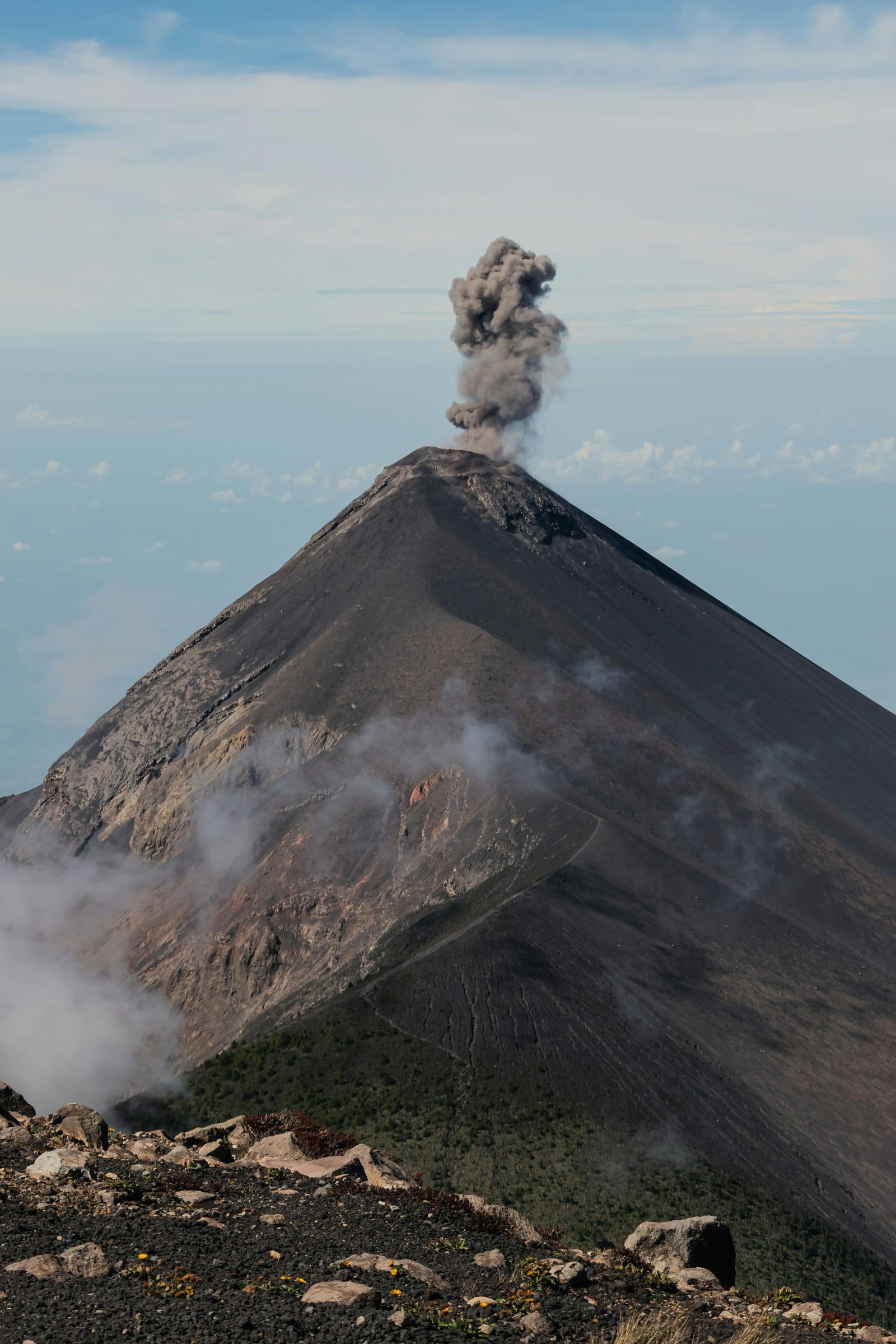
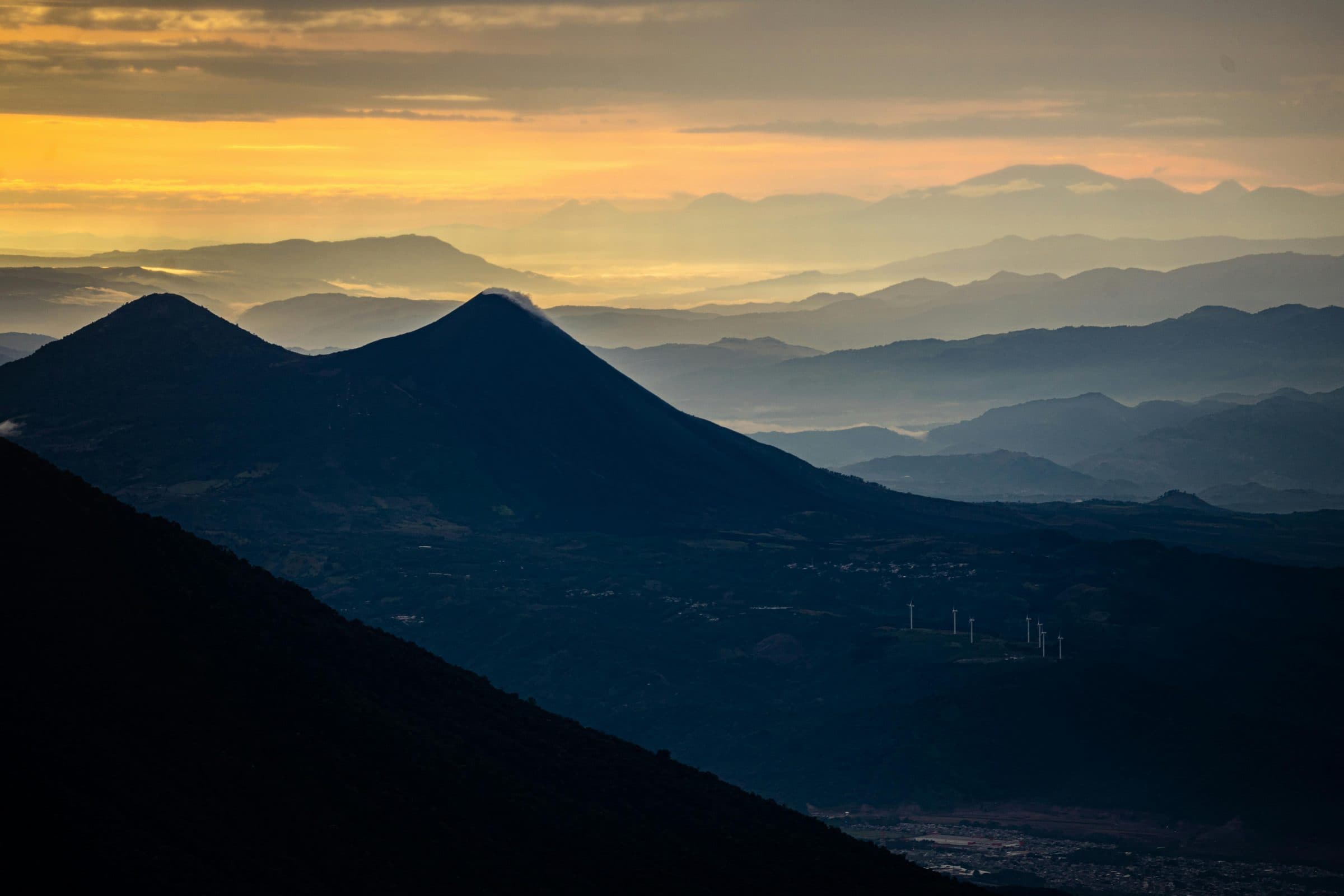
Guatemala is uniquely positioned for high-altitude coffee production. The country’s volcanic spine — a chain of thirty-seven volcanoes running from Mexico to El Salvador — creates a corrugated landscape of valleys, ridges, and slopes with cultivable land above 1,500 meters in nearly every department. Six of Guatemala’s eight recognised coffee regions include farms above 1,600 meters, and the highest commercial plantings in Huehuetenango and Acatenango approach 2,100 meters.
This is not merely an advantage of geography — it is an advantage of geology. Volcanic soils at altitude combine the benefits of mineral richness with the thermal regulation of high elevation. The andisol soils on Guatemala’s volcanic slopes retain moisture during the dry season, insulate roots from nighttime cold, and provide a slow-release buffet of nutrients that supports the extended maturation cycle. It is the combination of altitude and volcanic soil that makes Guatemalan coffee distinct from, say, high-altitude Colombian coffee grown on granite.
Every AVORA origin is grown above 1,300 meters, and four of our six single origins come from farms above 1,600 meters. This is not accidental. Altitude is the single non-negotiable criterion in our sourcing. Soil can be amended, processing can be refined, varietals can be replanted — but altitude is fixed. A farm at 900 meters will never produce the cup that a farm at 1,800 meters can. The mountain does the work. We select the mountains.
関連する産地
この記事と相性のよいコーヒー。