No single coffee varietal has reshaped the specialty industry as dramatically as Geisha. Its arrival at auction in 2004 overturned pricing conventions, redefined what a cup of coffee could taste like, and launched a global hunt for the genetic material that makes it possible. The story begins in a remote Ethiopian forest, passes through Central American research stations, and arrives — improbably, triumphantly — in a Guatemalan cup that tastes like nothing else.
Origins in Ethiopia's Gesha Forest
The Geisha varietal traces its genetic origins to the Gesha district in southwestern Ethiopia, a remote region of montane cloud forest in the Kaffa zone. Here, wild coffee grows in the understory of old-growth forest at elevations between 1,750 and 2,000 meters, shaded by towering Podocarpus and Juniperus trees. The plants are lanky and sparse — nothing like the compact, productive varietals that dominate commercial cultivation.
In the 1930s and 1940s, British colonial researchers collected wild coffee seeds from the Gesha forest as part of a broader effort to catalog genetic diversity and develop disease-resistant cultivars. These accessions were sent to research stations in Tanzania and Costa Rica, where they were catalogued and largely forgotten. The plants produced low yields and grew awkwardly — too tall, too delicate, too unproductive for commercial farming. For decades, Geisha languished in germplasm collections, a botanical footnote.
What the researchers did not know — what no one would discover for another sixty years — was that this lanky, low-yielding tree carried a sensory profile unlike any other Arabica cultivar on the planet. The same genetic traits that made it commercially unattractive — its elongated cherries, its sparse branching, its altitude sensitivity — were precisely what gave it a flavour profile of extraordinary floral and citrus complexity.
The Panama Revolution
The inflection point came in 2004, when the Peterson family of Hacienda La Esmeralda in Boquete, Panama, submitted a lot of Geisha to the Best of Panama auction. They had been growing the varietal for years on their highest parcels — above 1,600 meters on the slopes of Volcán Barú — after noticing that certain trees on their property produced cherries with an unusual, intensely floral aroma. They separated the lot, cupped it, and recognized something exceptional.
The auction result stunned the industry. The Geisha lot scored over 90 points and sold for $21 per pound — a price that shattered all existing records for green coffee. Cuppers described jasmine, bergamot, stone fruit, and a sweetness that lingered for minutes. It was not an incremental improvement over existing lots. It was a different category of experience. Within months, every ambitious producer in Central America was searching for Geisha seedlings.
In the years since, Hacienda La Esmeralda’s Geisha has sold at auction for prices exceeding $1,000 per pound. The variety has been planted across Colombia, Costa Rica, Guatemala, and even experimental farms in Asia. But the Panama revelation established a principle that the specialty coffee world has not forgotten: genetics matter as much as terroir, and there are varietals still undiscovered in Ethiopian forests that could redefine what coffee tastes like.
Geisha is not just a varietal. It is coffee’s reminder that terroir, patience, and genetics can produce something genuinely transcendent.
Geisha Comes to Guatemala
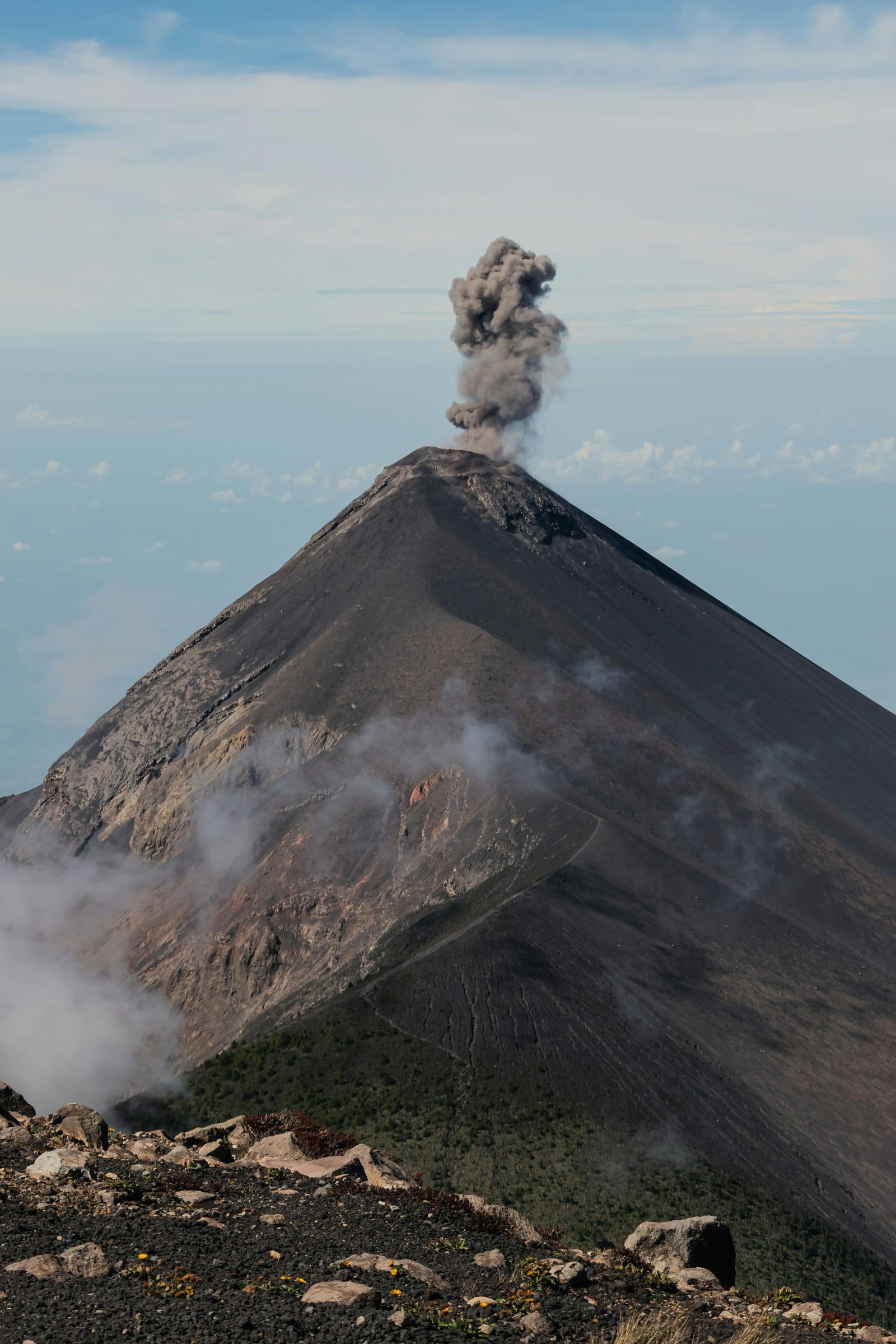
Guatemala’s volcanic highlands proved remarkably well suited to Geisha cultivation. The varietal thrives at altitude, and Guatemala offers some of the highest commercially viable coffee-growing elevations in Central America. The volcanic soils of Antigua, Acatenango, and Huehuetenango provide the mineral density that Geisha seems to require for full flavour development, while the pronounced dry season allows controlled cherry maturation.
The first serious Guatemalan Geisha plantings appeared around 2008, primarily in the Antigua Valley, where established fincas with the resources and patience to manage a low-yielding, labour-intensive varietal dedicated their highest parcels to the new trees. By 2012, Guatemalan Geisha lots were appearing at international competitions and scoring consistently above 88 points, drawing attention from specialty roasters worldwide.
What distinguishes Guatemalan Geisha from its Panamanian predecessor is the terroir imprint. Where Panama’s Geisha tends toward jasmine and tropical fruit, Guatemalan Geisha — grown in mineral-rich volcanic soil at slightly higher altitudes — expresses bergamot, white peach, and a distinctive white tea clarity. The acidity is structured and precise rather than exuberant. It is, in many ways, a more composed and contemplative expression of the varietal.
Why Geisha Tastes Different
Geisha’s distinctive flavour profile is rooted in its genetics. The varietal produces lower concentrations of chlorogenic acids — the bitter, astringent compounds that dominate most Arabica coffee — and higher concentrations of linalool, geraniol, and other terpenoid aromatics. These are the same compounds responsible for the aroma of jasmine flowers, bergamot oil, and rose petals. In effect, Geisha’s DNA is programmed to produce fewer bitter compounds and more floral aromatics than virtually any other cultivated coffee.
The plant’s physiology contributes as well. Geisha cherries are elongated and develop slowly — roughly 10–15% more time from flower to ripe cherry than Caturra or Catuai. This extended maturation period allows more complex sugar development and a fuller accumulation of aromatic precursors. The seeds themselves are larger and less dense than typical Arabica, which affects how they absorb heat during roasting and how flavours develop during extraction.
This is why Geisha demands careful handling at every stage. Heavy-handed roasting obliterates the delicate terpenoids. Aggressive brewing extracts the limited bitter compounds and overwhelms the florals. When treated with precision — light roast, careful extraction, moderate temperature — Geisha reveals a cup of extraordinary transparency: floral, sweet, clean, and long. It is coffee at its most expressive.
AVORA's Antigua Geisha
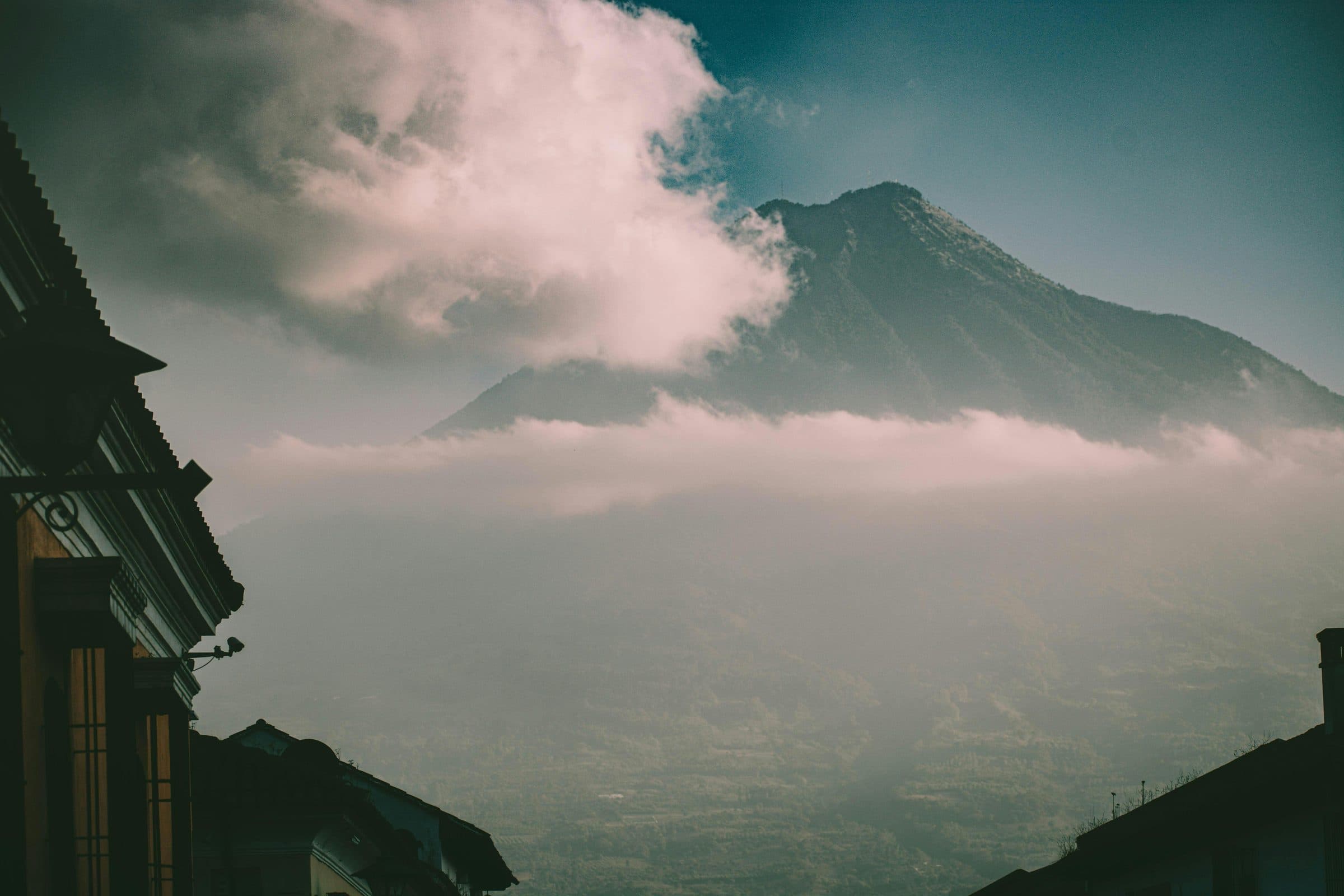
Our Antigua Geisha is sourced from a single finca in the shadow of Volcán de Agua, at an elevation of 1,500 to 1,700 meters. The trees are grown under managed shade of Gravilea and Inga, which filter sunlight and extend cherry development. Harvesting is done in three selective passes — only fully ripe cherries are picked — and the lot is kept separate from all other production on the farm.
Processing follows a strict washed protocol: cherries are pulped within six hours of harvest, fermented in clean water for 36 to 48 hours depending on ambient temperature, then washed and dried on raised beds under shade cloth for 15 to 20 days. This extended, gentle drying preserves the volatile aromatics that define the varietal. Every decision in the chain — from shade management to drying time — is designed to protect the delicate compounds that make Geisha extraordinary.
In the cup, our Antigua Geisha opens with bergamot and a whisper of jasmine, moves through a mid-palate of ripe white peach and raw honey, and finishes with a lingering white tea clarity that can last for minutes. It is not a bold coffee. It is not meant to be. It is meant to be tasted slowly, with attention, in a moment of quiet. This is what coffee can be when everything aligns — genetics, terroir, farming, processing, roasting, and the simple act of paying attention.
相关产区
与这篇文章格外相配的几支咖啡。